


A Smart Building Should Know When to Do Nothing

There is a strange assumption about smart buildings.
The smarter they become, the more they should do.
More sensors.
More automation.
More notifications.
More connected devices.
More things happening automatically.
But what if we have misunderstood intelligence?
A truly intelligent building should not react to everything.
It should understand what matters.
Sometimes the smartest action is turning on a light.
Sometimes it is adjusting the temperature.
Sometimes it is preparing a hotel room before a guest arrives.
And sometimes, the smartest decision is to do absolutely nothing.
That distinction is where the next generation of smart building automation begins.
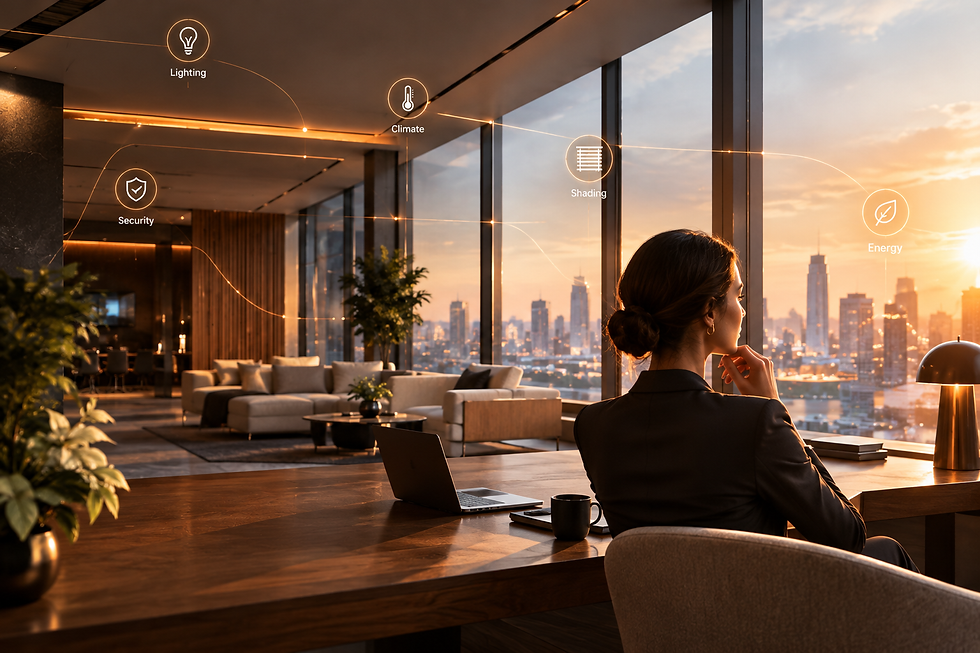
The Problem With Smart Buildings That React to Everything
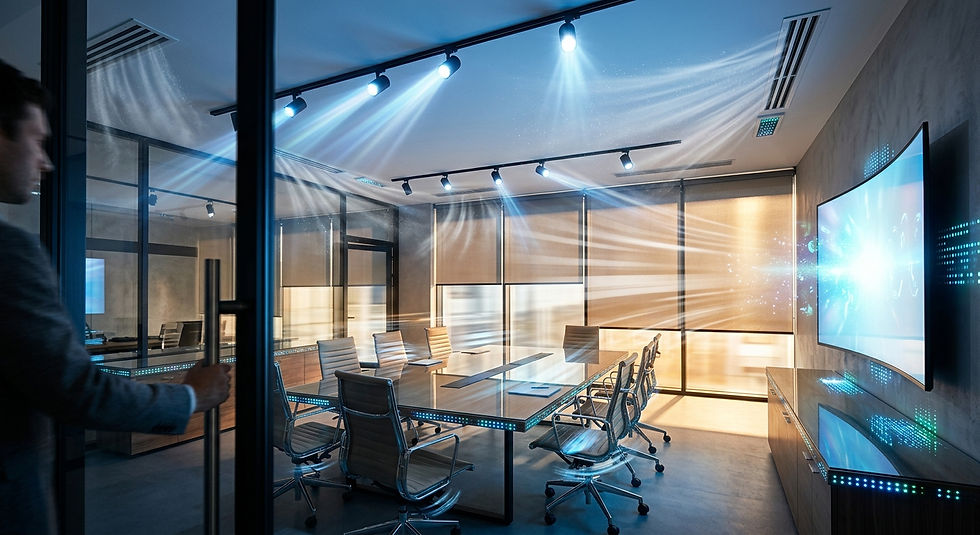
Imagine entering a meeting room.
The lights immediately switch on.
The air conditioning changes.
The blinds move.
A screen wakes up.
A ventilation system increases its output.
Every sensor detects your presence and triggers something.
Technically, the building is automated.
But is it intelligent?
Not necessarily.
Automation is easy to define:
If X happens, do Y.
Intelligence is more complicated:
If X happens, understand the context and decide whether Y is actually necessary.
That difference may sound small.
In practice, it changes everything.
A Sensor Can Detect You. Intelligence Understands Why You're There.
A motion sensor knows that someone entered a room.
It doesn't automatically know whether that person:
is staying for five minutes,
is working for eight hours,
is simply passing through,
needs full lighting,
prefers natural daylight,
requires cooling,
or is already comfortable.
This is why the future of intelligent building systems isn't simply about installing more sensors.
It is about connecting information.
Occupancy.
Time.
Temperature.
Natural daylight.
Room schedules.
Energy demand.
Security status.
User preferences.
Building conditions.
When these elements work together, automation becomes contextual.
The building stops asking:
"Did something happen?"
And starts asking:
"Does something need to happen?"
The Most Intelligent Command Might Be “Nothing”
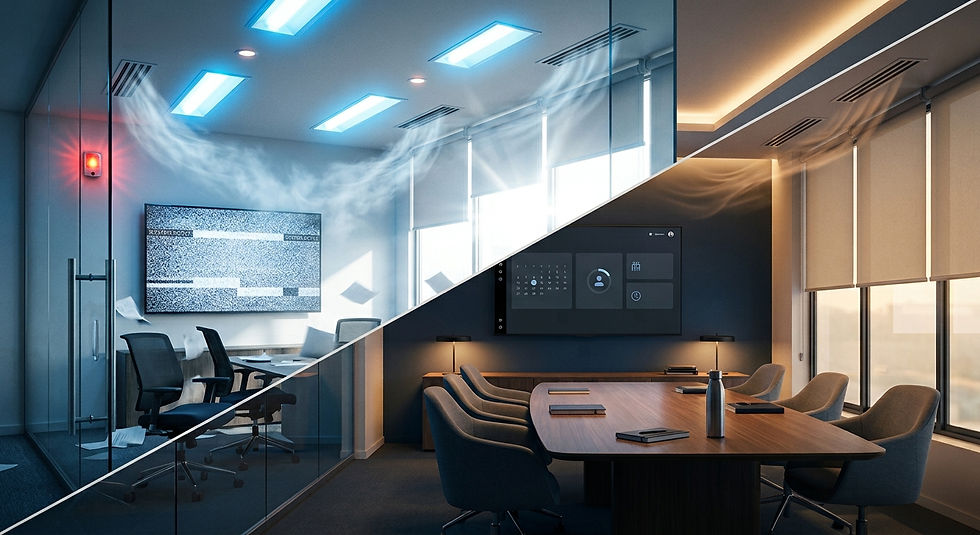
Consider an office at 3:00 PM.
A person walks into a room.
The room already has enough natural daylight.
The temperature is comfortable.
The HVAC system is operating efficiently.
The blinds are already positioned correctly.
The meeting room is scheduled for another meeting shortly.
What should the building do?
Nothing.
No unnecessary lighting.
No unnecessary temperature adjustment.
No unnecessary blind movement.
No unnecessary energy consumption.
The person simply enters the room.
The environment remains comfortable.
Nothing dramatic happens.
And that is precisely the point.
Good automation can be invisible.
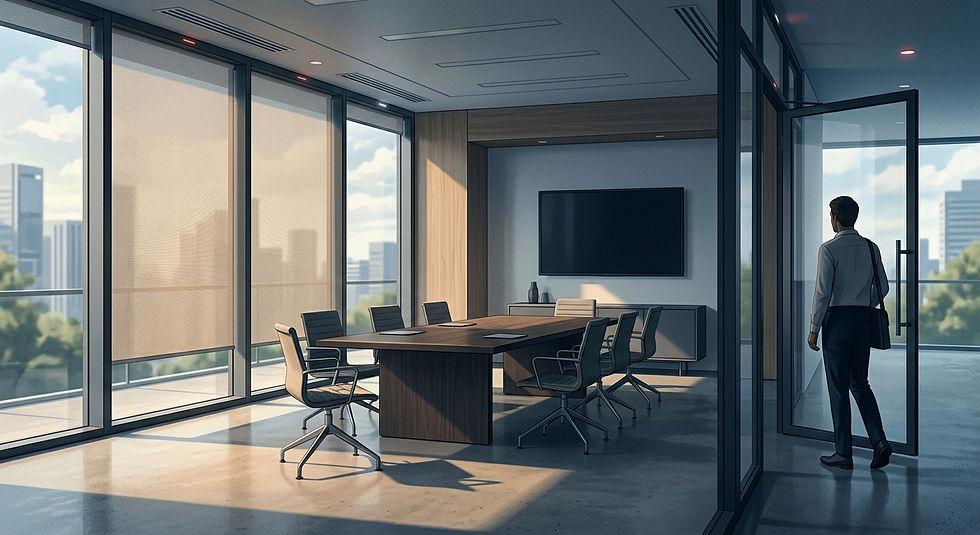
Smart Building Automation Is About Decisions, Not Devices
The traditional approach to building automation often starts with equipment.
Install a sensor.
Connect a switch.
Control the lights.
Add HVAC control.
Connect the blinds.
Add an app.
But an intelligent approach starts somewhere else.
It starts with questions.
What should happen when the building is empty?
What should happen when occupancy changes?
What conditions should override the normal schedule?
When should energy savings take priority?
When should comfort take priority?
When should the system simply maintain the current state?
These questions transform a collection of connected devices into an actual smart building system.
The technology becomes the infrastructure behind the experience.
Not the experience itself.
Why KNX Matters in This Conversation
This is one reason open, structured automation systems such as KNX are important for modern buildings.
A building shouldn't have dozens of disconnected systems making independent decisions.
Lighting shouldn't operate in isolation from occupancy.
HVAC shouldn't operate without understanding room conditions.
Shading shouldn't ignore sunlight.
Security shouldn't exist separately from building modes.
Energy management shouldn't be an afterthought.
With a properly designed KNX automation architecture, different building functions can communicate through a common control environment.
The result isn't simply more control.
It is coordinated control.
And coordination is what makes intelligent behavior possible.
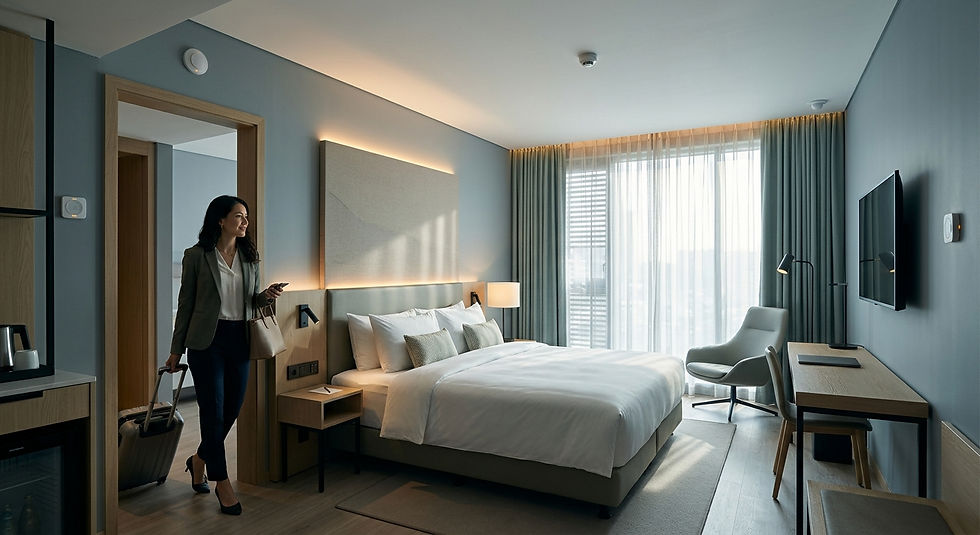
Imagine a Hotel That Understands Context
Now take the same idea into a hotel.
A guest checks out.
The room becomes unoccupied.
Should everything simply switch off?
Not necessarily.
The system could understand that the room is:
Vacant → being serviced → ready → reserved → occupied
Each state can have different requirements.
During vacancy, unnecessary lighting and HVAC operation can be reduced.
During housekeeping, selected systems can remain active.
Before a new guest arrives, the room can transition into a comfortable welcome state.
When the guest enters, the environment can respond according to the hotel's desired experience.
The guest doesn't need to understand any of this.
They simply walk into a room that feels right.
That's the power of smart hotel automation.
The technology works quietly in the background.
The Luxury of Not Having to Think
There is another reason invisible automation matters.
Human attention is limited.
Every unnecessary decision consumes a small amount of it.
Should I turn this light off?
Is the room too cold?
Did I leave the air conditioning running?
Should I close the blinds?
Is the meeting room still using energy?
Did someone forget to switch something off?
A well-designed smart environment removes many of these micro-decisions.
This is particularly important in luxury residential environments.
Luxury isn't necessarily about having more technology.
It is about having less to worry about.
Imagine leaving your home.
One action can trigger a carefully designed Away Mode:
Selected lights turn off.
Climate settings adjust.
Curtains respond.
Security activates.
Unnecessary equipment is switched off.
The home transitions into an energy-conscious state.
You don't manage ten devices.
You simply leave.
That is intelligent convenience.
When Doing Less Saves More
There is also a major sustainability opportunity here.
Buildings consume energy not only because systems are inefficient.
They consume energy because systems often operate without enough context.
An empty room may still be cooled.
A naturally illuminated space may still use artificial lighting.
An unused area may continue operating at full capacity.
A hotel room may remain conditioned after checkout.
A building may follow a fixed schedule even when actual occupancy is completely different.
Better building energy management isn't always about installing more efficient equipment.
Sometimes it is about making sure existing equipment operates only when it needs to.
That is where intelligent automation can create measurable value.
The Difference Between Automation and Intelligence
It helps to think about the evolution in three stages.
Stage 1: Manual
A person controls the environment.
You act → the building responds.
Stage 2: Automated
The building responds to predefined conditions.
Condition occurs → programmed action happens.
Stage 3: Intelligent
The building considers multiple conditions before deciding what should happen.
Context changes → system evaluates → appropriate response occurs.
The third stage is where smart buildings become genuinely interesting.
Because the objective isn't maximum activity.
It is maximum relevance.
A Smart Building Should Adapt Without Becoming Distracting
There is a delicate balance.
Too little automation creates inconvenience.
Too much automation creates friction.
Imagine a building where lights constantly change brightness.
Blinds move unexpectedly.
Temperature changes every few minutes.
Notifications appear constantly.
Systems react to every movement.
That building may be highly automated.
But it doesn't necessarily feel intelligent.
The best smart building automation creates an environment that feels natural.
The user notices the comfort.
They don't necessarily notice the machinery producing it.
Technology should support the space—not compete with it.
What Happens When the Building Knows When Not to Act?
This is where automation starts becoming more sophisticated.
A smart building can ask:
Is the room occupied?
But a better system asks:
Is the room actually being used?
It can ask:
Is the temperature changing?
But a better system asks:
Does the temperature require intervention?
It can ask:
Is there movement?
But a better system asks:
Does that movement require a response?
This is the transition from simple automation to intelligent environments.
The Future of Smart Buildings May Look Surprisingly Quiet
We often imagine the future as something spectacular.
Screens everywhere.
Voice commands.
Robotic systems.
Buildings constantly moving and responding.
But the most advanced buildings may look completely normal.
You walk in.
The temperature feels right.
The lighting feels natural.
The room is comfortable.
Energy isn't being wasted.
Security is operating quietly.
Systems communicate in the background.
Nothing demands your attention.
And you may never realize how much technology is working around you.
That is not a failure of smart technology.
It is the ultimate sign that it is working.
The Future Isn't More Automation. It's Better Decisions.
The next generation of smart building automation won't be defined by how many devices a building can control.
It will be defined by how intelligently those devices work together.
The smartest building isn't necessarily the one that reacts the fastest.
It is the one that understands when a response is necessary—and when it isn't.
For homes, that means greater comfort and peace of mind.
For hotels, it means better guest experiences and more efficient operations.
For commercial buildings, it means smarter resource management, improved comfort, and greater operational efficiency.
And for developers, it means creating buildings designed not just for today's technology, but for tomorrow's expectations.
Because true intelligence isn't about making a building do more.
It's about making the building understand when less is better.
Want Your Building to Think Beyond Automation?
At Teknetic, we design and deploy integrated smart solutions for homes, buildings, and hotels—connecting lighting, climate, security, shading, entertainment, and other building systems into a coordinated experience.
The goal isn't to fill your property with technology.
It's to make the technology disappear into the experience.


Comments